Trans-Resveratrol for Dogs - Anti-Aging and Vitality Explained
Last reviewed: October 2026
Short answer: Trans-resveratrol is a plant antioxidant that helps protect cells from oxidative stress, which is why it is studied for healthy aging. Research in dogs is still early, so think of it as one part of a daily wellness routine rather than a standalone fix. Only use it in a product made for dogs. Grapes and raisins are toxic to dogs and are never a safe source.
What is trans-resveratrol?
Resveratrol is a polyphenol found in grape skins, berries, peanuts, and Japanese knotweed. "Trans" refers to its most stable, active form. Supplements typically source it from Japanese knotweed rather than grapes.

How does it support dogs?
Antioxidant support
Oxidative stress builds up naturally with age. As an antioxidant, trans-resveratrol helps protect cells from free radical damage, which supports overall wellness as dogs get older.
Cellular energy
Resveratrol has been studied for its role in supporting mitochondria, the energy centers of cells. That is part of why it appears in healthy-aging formulas.
What does the research say?
Most resveratrol research has been done in the lab, in other animals, or in people. Studies in dogs are limited. That does not mean it has no value, but it does mean honest brands should not promise dramatic results. It is best viewed as one supporting ingredient alongside good nutrition, exercise, and regular vet care.
Is trans-resveratrol safe for dogs?
In measured amounts in products made for dogs, it is generally well tolerated. Two important cautions:
- Never feed grapes, raisins, or wine. Grapes and raisins can cause serious kidney injury in dogs. Resveratrol supplements are not a reason to offer them.
- Talk to your vet first if your dog takes medication, particularly blood thinners, or has a health condition.
Supporting healthy aging every day
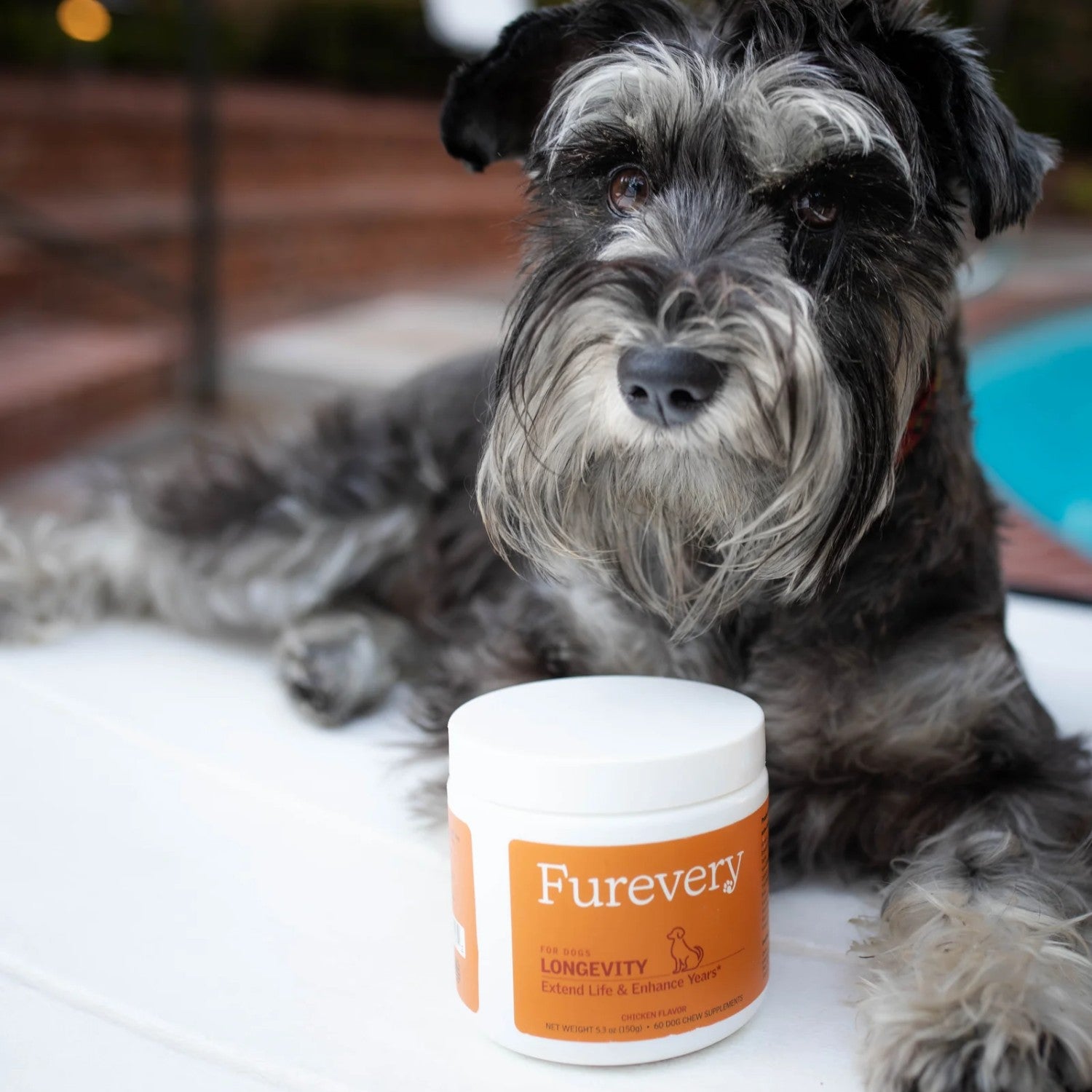
No single ingredient defines healthy aging. Daily movement, a lean body weight, mental enrichment, and regular checkups matter most. For broad daily wellness support as dogs age, see our Longevity Daily Multivitamin and check the product page for the current ingredient list.
Related reading: How to support senior dog health naturally
Frequently asked questions
Can dogs have resveratrol?
Yes, in measured amounts in a product made for dogs. Never use grapes, raisins, or wine as a source.
Where does resveratrol in supplements come from?
Usually Japanese knotweed, not grapes.
Is resveratrol proven to extend a dog's life?
No. Research in dogs is limited. It is best viewed as antioxidant support within an overall healthy routine.
This article is general information, not veterinary advice. Talk with your veterinarian about your dog's specific needs. Furevery supplements are not intended to diagnose, treat, cure, or prevent any disease.